


Article: How to Switch Your Restaurant to Compostable Packaging in California

How to Switch Your Restaurant to Compostable Packaging in California
California leads the nation on composting and organic waste diversion — and that means restaurants, food trucks, caterers, and any business that serves food have real obligations under state law. The good news: switching to compostable packaging is easier and more affordable than most operators expect. Here’s exactly how to do it.
Why California Restaurants Need to Act Now
California’s SB 1383, the Short-Lived Climate Pollutant Reduction Act, requires jurisdictions across the state to divert 75% of organic waste from landfills. For foodservice businesses, this translates to local ordinances requiring compostable or reusable serviceware, on-site organic waste collection, and documentation of composting program participation.
Many cities — including San Diego, Los Angeles, San Francisco, and Sacramento — have already enacted ordinances with enforcement teeth. Fines can start at $100 per day for non-compliance. Switching to certified compostable packaging is the clearest, most practical path to compliance.
Step 1: Audit What You’re Currently Using
Walk through your operation and list every single-use item: takeout containers, cups, lids, cutlery, bags, straws, napkins, garbage bags. Note the material (plastic, foam, paper, PLA) and the quantity you go through per week. This audit becomes the basis for your replacement order.
Common items to replace:
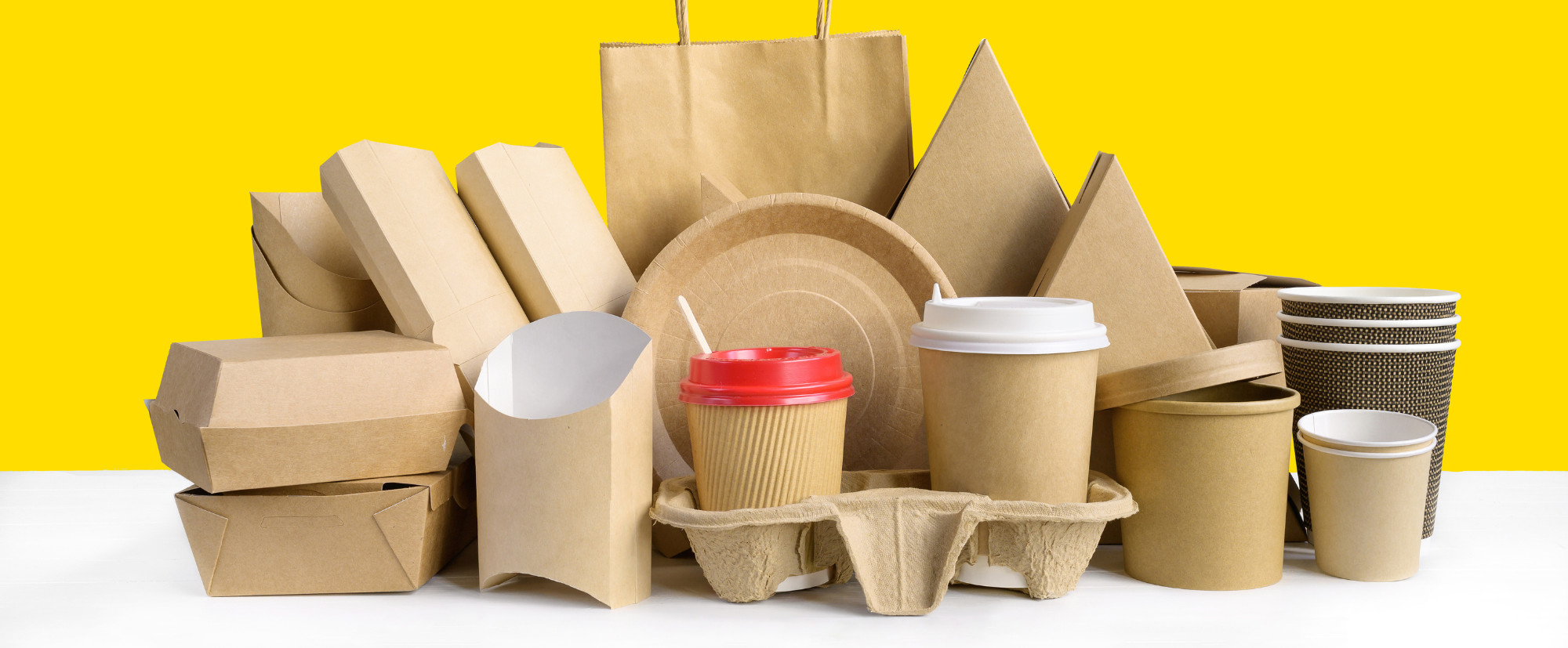
- Plastic or foam takeout containers → compostable fiber clamshells or PLA deli boxes
- Plastic cold cups → clear compostable PLA cups
- Paper hot cups with plastic lining → PLA-lined paper hot cups
- Plastic straws → paper or bamboo straws
- Plastic cutlery → CPLA compostable forks, spoons, knives
- Regular trash bags → compostable garbage bags for your organics bin
Step 2: Understand “Certified Compostable” vs. “Biodegradable”
This distinction matters enormously, and local composting facilities care deeply about it. “Biodegradable” is an unregulated marketing term. “Certified compostable” means the product has been independently tested and verified — most commonly by the Biodegradable Products Institute (BPI) — to break down completely in a commercial composting facility within 90 to 180 days.
Always look for the BPI certification logo on packaging before you buy. Every product Earth Care Now sells is BPI-certified or certified by an equivalent body. If a product just says “eco-friendly” or “biodegradable” without a certification mark, it may not be accepted by your local composting hauler.
Step 3: Contact Your Local Composting Hauler
Before ordering, call your organic waste hauler and ask: “What compostable packaging do you accept?” Most San Diego haulers accept BPI-certified products, but some have additional restrictions on certain plastics. Getting this answer upfront prevents ordering the wrong items.
If you don’t have an organics pickup service yet, California law requires your waste hauler to offer one. Call them and ask to be set up — it’s often included in your existing service contract.
Step 4: Source Your Compostable Packaging
Buy from a supplier that specializes in compostable foodservice packaging, not a general restaurant supply house where eco-friendly products are an afterthought. Look for:
- BPI-certified products across the board
- Case pricing without membership fees or minimums
- Fast shipping (next-day processing is the standard)
- Knowledgeable staff who can help with product matching
Earth Care Now carries a full range of World Centric, Stalk Market, and Planet+ compostable products — all BPI-certified, all available at case pricing, shipped within 24 hours. San Diego restaurants get free local delivery.
Step 5: Train Your Staff
Your team needs to know two things: which bin each item goes into, and what counts as contamination. A compostable cup with leftover soda in a landfill bag is wasted effort. Post a simple visual chart at each station showing green bin items (food scraps + certified compostable packaging) vs. landfill items (anything plastic or non-certified).
Many cities offer free staff training materials for SB 1383 compliance. Check your local sanitation department’s website.
Step 6: Document Your Compliance
Keep records of what you purchase and when. Save invoices from your compostable packaging supplier and your organics hauler receipts. Some jurisdictions require this documentation as part of annual compliance reporting. It also protects you if you’re ever audited.
How Much Does It Cost to Switch?
The honest answer: compostable packaging typically costs 10–25% more than the cheapest plastic alternatives, but far less than the premium you might expect. Fiber clamshells run roughly the same as mid-grade plastic containers. Compostable cups are competitive with paper cups with plastic lids.
And the calculation changes quickly when you factor in: potential fines for non-compliance, customer preference (studies consistently show diners prefer eco-friendly packaging), and the growing number of municipalities that offer grants or rebates to businesses that make the switch.
Ready to Make the Switch?
Browse our full catalog of BPI-certified compostable food packaging at earthcarenow.com. All products are available at case pricing, ship within 24 hours, and come with free delivery in San Diego. If you have questions about which products are right for your operation, contact us — we’re happy to help you build a compliant, practical packaging lineup for your restaurant.
Read more
Why Eco Friendly Products Are Important For Greener Planet?
If you are also looking for a way in which you can reduce the environmental footprint and improve the health of not just yourself but also the planet then the usage of eco-friendly products is prob...
Read more